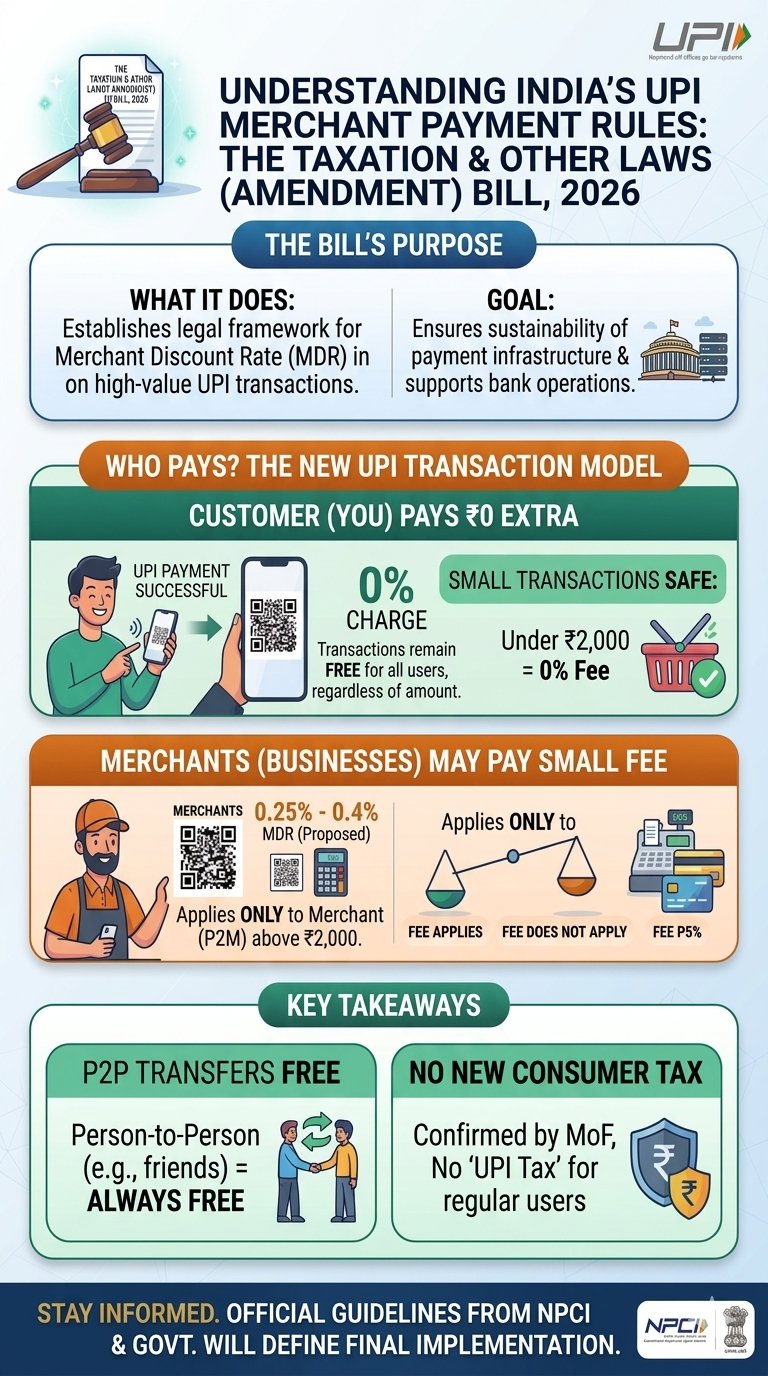
Niramal Sitaraman, Finance Minister of India introduced an new amendment bill to the parliment and it has been pass. The bill is called as the taxation and other laws amendment bill 2026.
In this post we are going to discuss about what is the amendment actually, is it a tax on the upi payment we done or what else. What is the law state actually. So stay tune and read further.
Many people have discussing and asking about weather the government is planning on having taxes on the upi transactions they made through like phone pay, google pay or any other upi transactions when it crosses 2000 rupees. There is more important issue that weather the upi transaction is going to be more expensive and it no longer free like it is now.
What is the Taxation and Other Laws (Amendment) Bill, 2026?
This law has been passed in the lower house of Indias parliment i.e. Lok Sabha. This law has changed the Zero MDR policy on the Digital payments.
What is Zero MDR policy? This policy is understand through example, like if a customer pays to the business via a qr code a 1000 rupees then he recieves 1,000 rupees without any deductions at all. This was started to boost the upi transactions in the India.
Now this Zero MDR policy has been vanished and now government has bring a new framework where the financial instituitions will charge some operational fees on the high value transactions. Government tells that for more than 2000 rupees the banks and the service provider will have to pay operational fees. So, basically this is for the banks, service provider and businessman. They have to pay this.
Some of the Rumors about this Tax spread online are explained below,
Governement has imposed immediate taxes and rates – This law has been passed now. But government does not have define the percentage of fees and also not implement the law. But yes After approving from the parliment the government has right to implement it at any time.
Government plan to charge over 2000 rupees – The government actual plan is to permit MDR with a nominal fee of 0.25% to 0.4% for the payements over the 2000 rupees only.
Zero impact over consumers or customers – This is stated by the nirmala sitaraman that there will be no issues to the customers. But, social media claims that this money will then businessmen credit from consumer itself by increasing the prise of the product.
Lets understand this by taking an example,
You buy an electronic appliance worth rupees 10,000 rs. You buy it from an local shop and pay via UPI. You pay him 10,000 rupees. You dont need to pay any extra amount.
On the other hand, the store owner, will have to pay 0.4% (or what percentage the governement will decide) this is called as the processing fee and operational fee. It will be the 40 rupees for 10K so the merchan will recieve the 9,960 rupees only.
Why does the government bring this Bill, what is the need of this bill?
The primary reason to bring this bill and rule is to make the digital payment sustainable over a long period of time.
The banks and financial companies host billions of the upi transactions without charging. Governement has provided them the subsidies to manage this payements to the banks. But they were not enough.
This tax will give some amount of money to the banks and financial companies. So, they will utilize this capital to build the infrastructure, upgrade the cybersecurity, reduce transactions failure rate and expand the banking infrastructure.
When the bill will actually implemented into our daily life?
The bill has passed only in the lok sabha and now it should also passed into the rajya sabha. Then the law will be going into the steps of making a law, the legislative steps. Then government will form the draft of operational framework for the law ex. the amount of money reduce, the percentage and system of how this will happen. After that there will be official announcement date of the laws to implement. Then thereafter the law will be implement.
If you like the article do share with your intelligent friends….
Related Posts